

How to Choose Wallpaper for the Illusion You Want
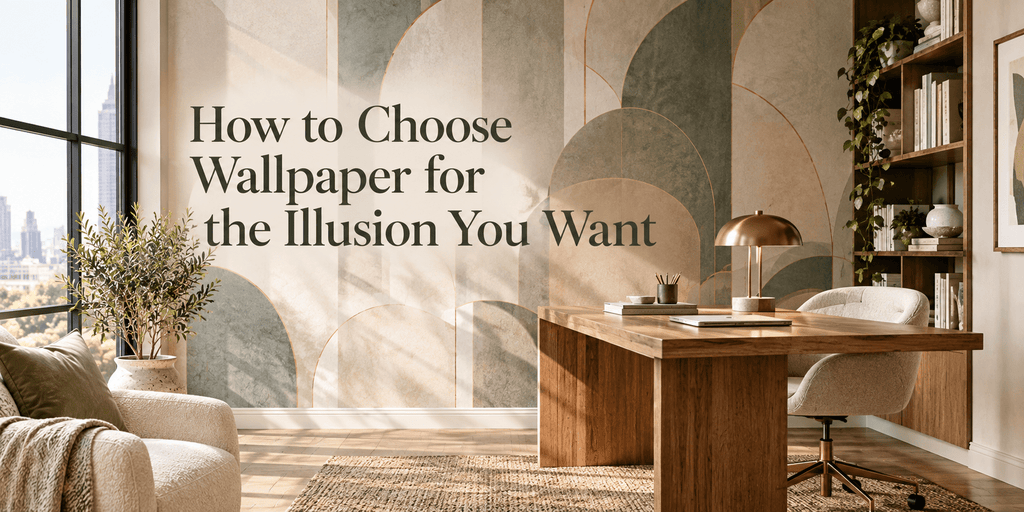
A room does not always need more space to feel more spacious. Sometimes, it needs a different visual perspective.
A narrow hallway can feel more open. A low-ceilinged bedroom can appear taller. A large living room can feel more intimate, and an empty wall can create the impression of greater depth. These transformations do not require structural renovations. Often, they begin with a thoughtful choice of wallpaper.
Wallpaper influences how we interpret the dimensions of an interior. Pattern direction guides the eye, color affects visual depth, texture creates dimension, and repetition changes how we experience boundaries. Together, these elements can make a room feel different without changing a single measurement.
The key is knowing which visual effect you want to achieve before choosing a design.
Instead of asking which wallpaper looks best, start with a more useful question: How do I want this room to feel?
Why Wallpaper Can Change the Perception of Space
The human eye does not experience a room as a set of measurements. It interprets visual information, including contrast, direction, scale, light, and the relationship between surfaces.
A wall covered in a high-contrast geometric pattern attracts attention immediately. A softly textured surface in a similar tone to the surrounding walls may feel quieter and less defined. A vertically elongated motif encourages upward movement, while a broad horizontal composition can draw attention across the room.
These differences influence the way we perceive architectural boundaries.
Wallpaper cannot physically increase a room's width or height. However, it can emphasize certain dimensions, soften others, and create a stronger sense of continuity.
That is what makes it such a valuable design tool.
1. Choose Wallpaper That Makes a Small Room Feel More Open
Small rooms often feel restrictive when their walls, furniture, and decorative elements compete for attention.
The solution is not necessarily to choose the palest wallpaper available. Instead, look for a design that allows the eye to move naturally through the space.
Low-contrast patterns, restrained textures, and consistent visual rhythm can help reduce the feeling of fragmentation. When the walls work together rather than appearing as separate visual blocks, a compact room may feel more cohesive and open.
Consider these options:
-
Subtle geometric patterns: Create structure without excessive visual interruption.
-
Soft botanical designs: Introduce movement and detail without overwhelming the room.
-
Fine embossed textures: Add depth while maintaining a relatively quiet appearance.
-
Low-contrast tonal patterns: Create visual interest without sharply defining every motif.
Continuity is particularly useful in smaller interiors. Using a compatible wallpaper across multiple walls can help the room feel like one connected environment rather than a collection of separate surfaces.
However, a small room does not automatically require a small pattern. A carefully selected large-scale design can also work beautifully, especially when the furniture and accessories are kept simple.
The goal is not to eliminate personality. It is to control visual competition.
2. Make a Low Ceiling Feel Taller
When a room feels short or compressed, the eye can benefit from stronger vertical movement.
Wallpaper with elongated shapes, vertical lines, or upward-flowing motifs can encourage the viewer to look from the floor toward the ceiling.
This creates a stronger impression of height.
Vertical patterns work particularly well when the room already contains tall windows, floor-length curtains, narrow cabinetry, or other architectural features that reinforce the same direction.
For a refined result, consider:
-
Elongated botanical motifs
-
Subtle vertical geometric designs
-
Linear embossed textures
-
Repeating patterns with an upward rhythm
-
Designs with narrow, vertically oriented shapes
Avoid assuming that every vertical stripe will automatically make a ceiling look higher. Strong horizontal interruptions, bulky furniture, and contrasting ceiling colors can influence the overall result.
The most effective wallpaper works with the architecture rather than relying on a single visual trick.
3. Make a Narrow Room Feel Wider
A narrow bedroom, hallway, or living room often feels restrictive because the eye moves quickly along its length without fully registering the available width.
Wallpaper can help redirect that movement.
Horizontal patterns, elongated motifs, and broad compositions can encourage the eye to travel laterally. This may make the side walls feel more connected and the room feel less confined.
You do not need literal stripes to create this effect.
Flowing organic patterns, layered abstract forms, and geometric designs with horizontal emphasis can all establish lateral movement.
Color matters, too. A low-contrast wallpaper can help the walls feel less visually segmented, while a dramatic feature wall can be useful when you want to create a deliberate focal point.
Before choosing a design, consider whether the room needs to feel wider overall or whether one particular wall needs more visual presence. These are different objectives, and the wallpaper should respond accordingly.
4. Create More Visual Depth
Some rooms feel flat because their surfaces lack variation. Others feel disconnected because the far wall appears visually distant from the rest of the interior.
Wallpaper can address either problem, but the approach will differ.
If the room feels flat, choose a design that introduces layers, dimensional texture, or tonal variation. Embossed finishes can create subtle highlights and shadows, while overlapping motifs can suggest depth.
If the far wall feels too distant, a deeper color or a more substantial pattern can give it greater visual weight. This can make the room feel more balanced and intimate.
Consider wallpaper featuring:
-
Layered botanical compositions
-
Atmospheric patterns
-
Mineral-inspired textures
-
Dimensional geometric designs
-
Tonal surfaces with subtle variation
The important distinction is between physical depth and perceived depth. Wallpaper does not extend the room beyond its walls, but it can create a richer visual experience across those surfaces.
5. Use Color to Control Visual Distance
Color influences how strongly a wall stands out from its surroundings.
Lighter, softer colors can make boundaries feel less visually heavy, especially when they work with the room's natural light. Darker or more saturated colors can give a wall greater presence and create a more enveloping atmosphere.
Neither approach is universally better.
A pale, low-contrast wallpaper may help a compact room feel airy. A deep navy, charcoal, or forest-green wallcovering may make a spacious dining room feel more intimate and purposeful.
When selecting color, consider three things:
Brightness: How light or dark is the wallpaper compared with the surrounding surfaces?
Contrast: Does the pattern stand out sharply, or does it blend into the overall palette?
Undertone: Does the wallpaper work with the warmth or coolness of the flooring, furniture, and other materials?
A wallpaper that looks spacious and understated in a bright showroom may feel more intense in a dimly lit room. Always evaluate the sample in the environment where it will be installed.
6. Make a Large Room Feel More Intimate
Spacious rooms can present a different challenge.
High ceilings, long walls, and widely separated furniture can sometimes make an interior feel empty rather than generous.
In this situation, making everything visually recede may not be the right strategy.
A richer wallpaper can help establish a sense of enclosure and give the room a stronger identity.
Deep colors, expressive patterns, tactile finishes, and larger-scale motifs can make a wall feel more substantial. This can help define a dining area, create a more inviting bedroom, or establish a comfortable atmosphere in a large lounge.
For example, a deep, textured wall behind a dining table can make the area feel like a distinct destination within a larger room.
The objective is not to make the room seem smaller for its own sake. It is to create a better relationship between the architecture, furniture, and the people using the space.
7. Choose Pattern Scale Carefully
Pattern scale can influence how large, small, or visually complex a wall appears.
Small-scale patterns create frequent repetition. Depending on their contrast and density, they can form a fine visual texture or make a surface feel busy.
Large-scale patterns create broader shapes and stronger visual landmarks. They can give a room a distinctive focal point or simplify the overall impression by reducing the number of individual motifs the eye registers.
A useful approach is to evaluate the pattern from two distances.
First, examine it close up. Look at the details, texture, and quality of the design.
Then step back and observe the entire wall.
Does the pattern create a unified surface? Does it dominate the furniture? Does it establish a pleasing rhythm, or does it make the room feel fragmented?
This second view is especially important because wallpaper is experienced across a room, not just at arm's length.
8. Use Texture to Add Dimension Without Cluttering the Room
Texture can be one of the most effective ways to create a sense of depth without introducing additional furniture or accessories.
Embossed and tactile wallpaper catches light differently across the surface. Small variations in shadow and highlight give the wall a dimensional quality that a completely flat finish may lack.
This is particularly useful when you want an interior to feel sophisticated without adding more visual information.
Consider the relationship between wallpaper and the materials already present:
-
Linen upholstery pairs naturally with understated woven textures.
-
Natural wood can complement organic or mineral-inspired surfaces.
-
Stone and concrete finishes can work with restrained geometric patterns.
-
Velvet and other rich textiles can benefit from subtle embossed details.
-
Brushed metal can create an interesting contrast against tactile wallcoverings.
The strongest combinations do not necessarily use identical textures. They balance different materials so that each contributes something distinctive.
9. Decide Whether to Use a Feature Wall or Wallpaper the Entire Room
The placement of wallpaper can change the way a room is perceived just as much as the design itself.
A single feature wall creates a clear focal point. It can draw attention toward a fireplace, bed, dining area, or architectural feature.
However, a strong contrast between the feature wall and the remaining painted surfaces can also emphasize the room's boundaries.
Wallpaper across multiple walls creates a different effect. It can establish continuity, soften transitions, and make the interior feel more enveloping.
Use a feature wall when you want to direct attention toward a specific location.
Consider wallpapering multiple walls when you want to create a unified atmosphere or reduce the visual separation between surfaces.
Neither approach is automatically better for small or large rooms. The decision should depend on the architecture, the pattern, and the intended visual experience.
10. Consider Lighting Before Making Your Final Choice
Lighting can change the apparent depth, color, and intensity of wallpaper.
Natural daylight may reveal undertones that are difficult to see under artificial lighting. Directional light can emphasize raised patterns and embossed finishes, while diffuse illumination can make texture appear softer.
A design that seems understated during the day may become more dramatic at night.
Before making a final decision, examine your wallpaper sample under different conditions:
-
Morning daylight
-
Afternoon sunlight
-
Evening ambient lighting
-
Direct or directional lighting
-
The lighting conditions you use most often
Pay attention to shadows, contrast, and the way the wallpaper interacts with nearby furniture.
A good wallpaper choice should suit the room throughout its normal use, not just under ideal showroom lighting.
Common Mistakes When Choosing Wallpaper for Optical Effects
Even a beautiful design can produce an unexpected result when it is selected without considering the whole room.
Choosing wallpaper based on color alone
A light wallpaper is not guaranteed to make a room feel larger. Pattern density, contrast, lighting, and furniture placement all contribute to the result.
Using an overly busy design in an already crowded room
When the room contains many competing details, a high-contrast pattern can increase visual complexity instead of creating openness.
Assuming small rooms need small patterns
Large-scale wallpaper can work in compact spaces when its composition and surrounding furnishings are carefully considered.
Ignoring the furniture
A wallpaper that looks excellent on its own may compete with a sofa, headboard, cabinetry, or artwork.
Expecting wallpaper to solve every spatial problem
Wallpaper can influence perception, but it cannot compensate for every issue involving lighting, furniture arrangement, or architectural proportions. It works best as part of a coordinated design approach.
A Practical Framework for Choosing the Right Wallpaper
Before selecting a wallcovering, identify the main effect you want to create.
| Your design goal | Wallpaper characteristics to consider |
|---|---|
| Make a room feel more open | Soft contrast, visual continuity, restrained patterns |
| Emphasize ceiling height | Vertical rhythm, elongated motifs |
| Emphasize width | Horizontal movement, broad compositions |
| Create visual depth | Layered patterns, tonal variation, dimensional texture |
| Make a large room more intimate | Deeper colors, richer texture, expressive patterns |
| Reduce visual clutter | Low-contrast designs, subtle repetition |
| Create a focal point | Stronger contrast, distinctive scale, deliberate placement |
| Add dimension without clutter | Embossed finishes, tactile patterns |
Use this table as a starting point, not a rigid set of rules. The best choice will always depend on the specific room and the way its elements interact.
Final Thoughts
Choosing wallpaper for an optical effect begins with understanding how you want to experience the room.
A narrow space may benefit from patterns that encourage lateral movement. A low ceiling may respond to vertical rhythm. A flat interior may gain depth through texture, while a large room may become more inviting with richer color and a stronger visual focal point.
The most successful results come from balancing pattern, scale, color, lighting, furniture, and architecture rather than relying on one design feature alone.
At AdaWall, wallpaper can be approached as more than a decorative finish. It is an opportunity to shape atmosphere, reinforce architectural character, and influence how a space is perceived.
The right design does not need to make an optical illusion obvious.
It simply needs to make the room feel right.