

Residential Wallcovering Trends That Transform Any Room
Wallpaper has moved far beyond the idea of simply adding color to a wall.
Today, residential wallcoverings can influence how a room feels, define architectural features, introduce texture, and create visual depth without requiring a major renovation. The most interesting developments aren't necessarily about following the loudest decorating trend. They are about using walls more intentionally.
From dimensional textures and nature-inspired patterns to sophisticated neutrals and architectural effects, today's wallcoverings offer homeowners more ways to shape an interior around the way they actually live.
At AdaWall, we see this evolution as a shift from decorating walls to designing with walls.
The Wall Is Becoming Part of the Architecture
For years, walls were often treated as a background for furniture and artwork.
That approach is changing.
Designers are increasingly using wallcoverings to create visual structure within a room. A textured wall can emphasize a ceiling height. A bold pattern can define a dining area. A tonal finish can make a hallway feel intentional rather than transitional.
The wall itself becomes an active design element.
This is one of the biggest shifts happening in residential interiors today.
1. Textured Wallpaper Is Replacing Flat Surfaces
One of the strongest trends in contemporary wall design is the growing interest in texture.
Smooth painted walls can provide a clean foundation, but textured wallcoverings introduce another layer of visual information.
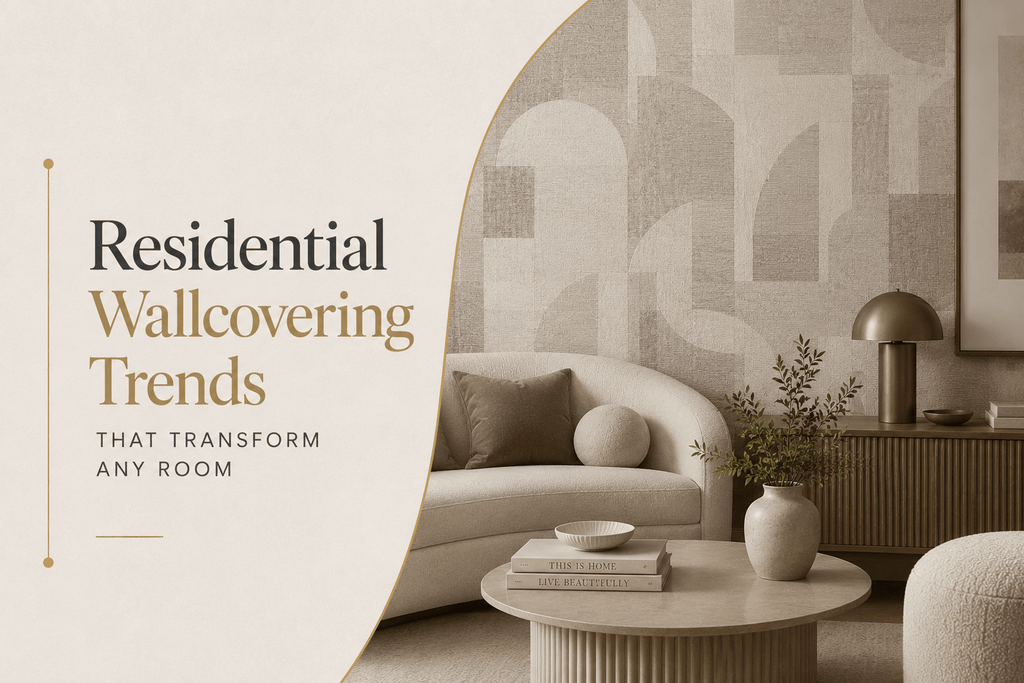
Linen-inspired surfaces, woven effects, mineral textures, subtle relief, and dimensional patterns can make walls feel richer without necessarily adding stronger colors.
This is particularly effective in neutral interiors.
Instead of relying on multiple decorative objects to create interest, the wall itself provides depth.
2. Embossed Wallpaper Adds Architectural Dimension
Embossed wallpaper takes texture a step further.
Raised details interact with natural and artificial light, creating subtle shadows that change throughout the day.
This can give a wall an almost architectural quality.
Depending on the design, embossed surfaces can suggest:
-
Fabric
-
Stone
-
Plaster
-
Organic forms
-
Geometric relief
-
Handcrafted materials
The result is especially effective when the rest of the room is relatively restrained.
The wall doesn't need to be loud to become a focal point.
3. Warm Neutrals Are Becoming More Sophisticated
Neutral interiors aren't disappearing.
They're becoming more nuanced.
Instead of relying exclusively on cool white, today's residential spaces are embracing warmer tones such as:
-
Cream
-
Ivory
-
Sand
-
Taupe
-
Warm beige
-
Soft greige
-
Clay-inspired neutrals
When combined with texture, these colors create depth without overwhelming a room.
They also work naturally with wood, stone, linen, leather, and other materials commonly found in contemporary homes.
4. Nature-Inspired Wallcoverings Continue to Grow
Nature remains one of the most enduring sources of inspiration in interior design.
But today's nature-inspired wallpaper isn't limited to traditional floral prints.
Contemporary interpretations include:
-
Abstract botanical forms
-
Delicate branches
-
Organic linework
-
Layered foliage
-
Stone-inspired surfaces
-
Earth-inspired textures
-
Subtle landscape references
These designs can introduce softness into modern architecture while maintaining a sophisticated appearance.
5. Biophilic Design Is Becoming More Refined
Biophilic design continues to influence residential interiors, but it is becoming less literal.
Instead of covering a room with obvious botanical imagery, designers are incorporating smaller references to the natural world.
A muted green wall.
A textured surface resembling natural fibers.
A flowing organic pattern.
A stone-inspired finish.
A subtle botanical motif.
These details create an interior that feels connected to nature without becoming themed.
6. Tonal Patterns Create Quiet Luxury
Not every statement wall needs dramatic contrast.
Tonal wallpaper uses variations within a similar color family to create visual interest.
For example, a warm beige wall might feature a slightly darker embossed pattern.
From a distance, the wall appears calm.
Up close, the texture becomes more noticeable.
This approach works particularly well in bedrooms, living rooms, and sophisticated dining spaces where you want the room to feel layered without feeling busy.
7. Oversized Patterns Are Being Used More Intentionally
Large-scale wallpaper patterns can completely change the character of a room.
But the trend isn't about simply choosing the biggest design available.
Scale is being used strategically.
A large botanical pattern can create a dramatic backdrop in a bedroom.
A large geometric design can give a dining room architectural energy.
An oversized abstract pattern can become artwork in its own right.
The key is to let the pattern have enough visual space to breathe.
8. Small Rooms Are Getting Bolder
For years, homeowners were often advised to keep small rooms light and visually simple.
That advice is becoming less absolute.
Powder rooms, compact studies, hallways, and small bedrooms are increasingly being treated as opportunities for stronger design.
A rich textured wallpaper or dramatic pattern can make a compact room feel intentional rather than limited.
Instead of asking:
"How can I make this room disappear?"
designers are increasingly asking:
"How can I give this room a personality?"
9. Wallpaper Is Defining Open-Concept Spaces
Open-plan homes create a unique design challenge.
Without traditional walls separating every function, spaces can sometimes feel visually indistinct.
Wallpaper can help establish zones without constructing physical barriers.
A different wallcovering can define:
-
A dining area
-
A reading corner
-
A home office
-
A seating area
-
An entry zone
The architecture stays open while the visual identity changes.
10. Ceilings Are Becoming Part of the Design
Walls aren't the only surfaces receiving attention.
Designers are increasingly looking upward.
Wallpaper on a ceiling can create an unexpected moment and make a room feel more immersive.
This can be especially effective in:
-
Dining rooms
-
Bedrooms
-
Powder rooms
-
Entryways
A ceiling treatment doesn't have to be dramatic.
A subtle textured finish can simply add another layer of architectural interest.
11. Hallways Are No Longer an Afterthought
Hallways occupy considerable wall area but are often overlooked.
That's changing.
Because hallways don't require large amounts of furniture, they can be ideal locations for wallpaper.
A sophisticated pattern can turn a corridor into a visual transition between rooms.
A textured neutral can make a narrow hallway feel more considered.
A bold design can create a memorable first impression near an entryway.
These spaces prove that wallpaper doesn't need to be reserved for the obvious rooms.
12. Wallpaper Is Being Used to Highlight Architectural Features
Instead of covering every wall equally, designers are increasingly using wallpaper to emphasize existing architecture.
Consider:
-
Arched niches
-
Fireplace walls
-
Alcoves
-
Built-in shelving
-
Bed walls
-
Dining areas
-
Staircase walls
Wallpaper can make these features more visually important without physically modifying them.
This is one of the easiest ways to make an interior feel custom-designed.
13. Material-Inspired Designs Are Bringing Depth Indoors
Stone, plaster, fabric, wood, and woven materials continue to influence wallpaper design.
The appeal is easy to understand.
Natural materials provide depth and character, but they aren't always practical for every wall.
Wallpaper can reinterpret these surfaces in a lighter and more flexible format.
The result can provide the visual character of a material while remaining part of a cohesive wallcovering system.
14. Maximalism Is Becoming More Controlled
Bold interiors are returning, but today's maximalism often feels more edited.
Instead of combining every possible pattern and color, designers are choosing one strong element and building around it.
A dramatic wallpaper can become the dominant visual feature while furniture and accessories remain relatively restrained.
This creates impact without chaos.
The wallpaper provides the personality.
The rest of the room supports it.
15. Wallpaper Is Being Chosen for How It Feels, Not Just How It Looks
One of the most interesting developments in residential design is the growing focus on atmosphere.
Homeowners aren't only asking:
"Does this wallpaper look good?"
They're asking:
"How will this room feel?"
A soft textured neutral may create calm.
A deep color may create intimacy.
A botanical design may feel connected to nature.
A geometric pattern may create energy.
A dimensional surface may create sophistication.
This shift makes wallpaper part of the emotional experience of an interior.
How to Choose a Trend That Won't Date Your Home
Following trends doesn't mean your interior has to become temporary.
The trick is to distinguish between fashionable details and enduring design principles.
A trend can work beautifully when it supports:
-
Your home's architecture
-
Your furniture
-
Your lighting
-
Your lifestyle
-
Your personal taste
Texture, natural inspiration, tonal color, and thoughtful pattern scale are examples of trends that can remain relevant because they are rooted in fundamental design principles.
The Importance of Texture and Lighting
Wallpaper should never be considered independently from light.
Natural daylight can reveal texture differently from evening illumination.
Embossed surfaces may create stronger shadows under directional lighting.
Dark colors can become more intimate under warm lamps.
Reflective finishes can increase brightness.
Before selecting a wallcovering, consider how the room changes from morning to night.
The most successful wallcoverings don't simply look good in a sample.
They respond beautifully to the environment around them.
Why AdaWall Is Part of the Modern Wallcovering Conversation
At AdaWall, we approach residential wallcoverings as an opportunity to combine visual design with material depth.
Our collections explore textured surfaces, embossed finishes, contemporary patterns, organic inspiration, and sophisticated color palettes designed for modern interiors.
Whether you're creating a calm bedroom, a dramatic dining room, a refined living space, or a memorable entryway, the wall can become one of the most important design elements in the room.
The goal isn't to follow every trend.
It's to find the trends that genuinely improve the space.
Frequently Asked Questions
What are the biggest residential wallpaper trends right now?
Textured surfaces, embossed finishes, warm neutrals, nature-inspired patterns, tonal designs, large-scale motifs, and architectural applications are among the strongest directions in contemporary residential wallcovering.
Is textured wallpaper still popular?
Yes. Texture remains one of the most versatile ways to add depth and sophistication without relying on strong color or dramatic pattern.
Can wallpaper make a small room look better?
Absolutely. Small rooms can benefit from carefully scaled patterns, rich textures, and bold designs that give the space a stronger identity.
Is botanical wallpaper still fashionable?
Nature-inspired wallpaper continues to be relevant because organic forms and natural colors have enduring appeal beyond short-term trends.
Can wallpaper be used on a ceiling?
Yes. Ceiling wallpaper can create a more immersive interior and add an unexpected architectural detail, particularly in bedrooms, dining rooms, and powder rooms.
Final Thoughts
The most exciting residential wallcovering trends aren't simply about what looks fashionable today.
They're about giving homeowners more ways to use their walls creatively.
Texture can add depth.
Pattern can create identity.
Nature-inspired designs can introduce softness.
Embossing can create dimension.
And thoughtful color can completely change the atmosphere of a room.
At AdaWall, we believe the future of residential wallcovering isn't about decorating empty walls.
It's about turning every wall into an intentional part of the home.