

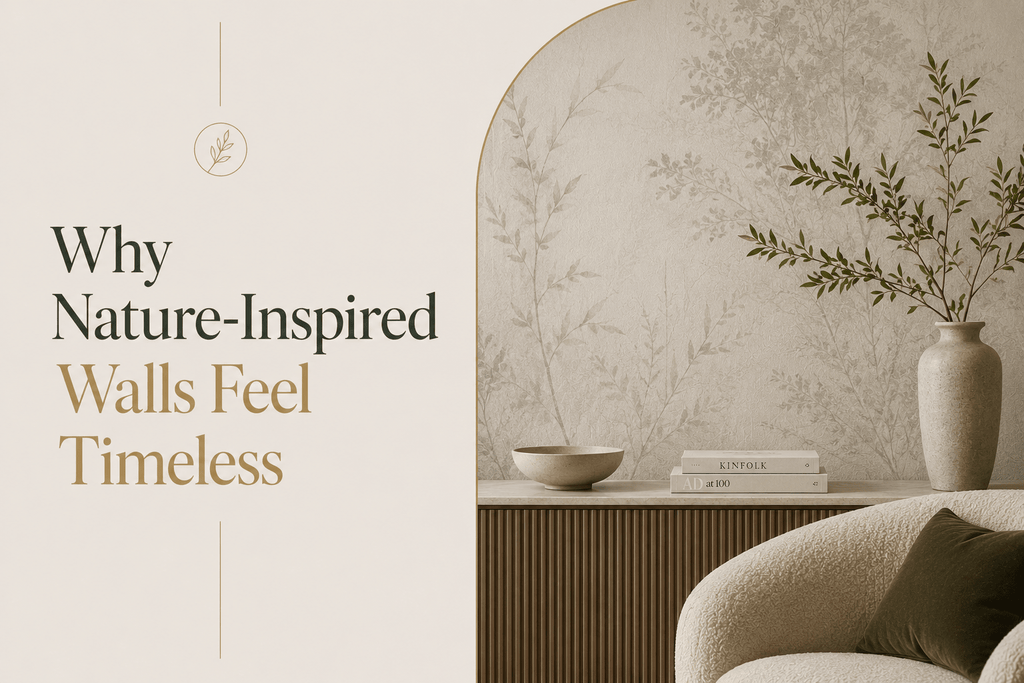
Why Nature-Inspired Walls Feel Timeless
Interior design trends come and go.
One year, bold geometric patterns dominate. The next, minimalist palettes take center stage. Colors, materials, and decorative styles constantly evolve, yet one source of inspiration continues to remain relevant across every era: nature.
Whether it's the quiet elegance of linen-like textures, the organic rhythm of botanical motifs, the warmth of earthy colors, or the subtle character of stone-inspired finishes, nature-inspired walls have an enduring appeal that rarely feels outdated.
Why?
Because nature isn't a trend—it's a reference point that has shaped architecture, art, and interior design for centuries.
At AdaWall, we believe wallpaper inspired by natural materials and landscapes creates interiors that feel authentic, balanced, and comfortable for years to come.
Why We Naturally Respond to Organic Design
People spend much of their time indoors, yet our visual preferences have been shaped by the natural world.
Curved forms, irregular textures, layered materials, and earthy colors often feel familiar because they echo the environments we've experienced throughout our lives.
This doesn't mean every home should resemble a forest or garden.
Instead, subtle references to nature can make interiors feel softer, calmer, and more inviting without overwhelming the space.
Nature-inspired wallpaper works because it introduces these familiar qualities in a refined, architectural way.
Timeless Design Is About Longevity, Not Trends
A timeless interior isn't frozen in one style.
Instead, it avoids relying too heavily on short-lived trends.
Nature-inspired wallpaper often achieves this because it draws from elements that don't become obsolete:
-
Stone textures
-
Linen-like finishes
-
Botanical silhouettes
-
Wood-inspired patterns
-
Earthy color palettes
-
Flowing organic forms
These references have remained relevant for generations because they are rooted in materials and landscapes rather than fashion.
Texture Brings Nature Indoors
Nature is rarely perfectly smooth.
Tree bark, woven fibers, stone, sand, and fabric all contain subtle variation.
Wallpaper can recreate that sense of depth through texture.
Embossed finishes, woven-inspired surfaces, and linen textures introduce dimension that paint alone cannot achieve.
Instead of creating a flat backdrop, textured wallpaper gives walls a tactile quality that feels more natural and visually engaging.
The result is an interior that feels layered rather than overly polished.
Earthy Colors Never Lose Their Appeal
Some color trends disappear within a few years.
Earth-inspired palettes tend to endure because they are inherently versatile.
Consider shades such as:
-
Warm ivory
-
Sand
-
Taupe
-
Clay
-
Olive
-
Moss
-
Stone gray
-
Soft terracotta
-
Deep forest green
These colors work beautifully across a wide range of architectural styles, from contemporary apartments to classic family homes.
They also pair effortlessly with natural wood, stone, linen, leather, and metal finishes.
Botanical Patterns Can Be Sophisticated
When people hear "botanical wallpaper," they sometimes imagine oversized tropical leaves or colorful floral prints.
While those styles certainly have their place, modern botanical design is often much more subtle.
Today's collections may feature:
-
Delicate leaf silhouettes
-
Abstract branches
-
Organic line work
-
Soft floral textures
-
Layered foliage
-
Minimal botanical motifs
These understated patterns create movement without overwhelming the room, making them suitable for both contemporary and traditional interiors.
The Beauty of Imperfection
Nature is never perfectly symmetrical.
A stone surface has variation.
Wood grain changes from plank to plank.
Leaves grow in different directions.
This subtle imperfection gives natural materials their character.
Wallpaper inspired by these qualities often feels more authentic because it avoids rigid repetition.
Small irregularities and layered textures create a relaxed elegance that remains visually interesting over time.
Nature and Light Work Together
One reason nature-inspired wallpaper feels dynamic is its relationship with light.
Embossed textures catch sunlight differently throughout the day.
Soft relief creates gentle shadows.
Organic patterns become more pronounced under directional lighting.
Instead of looking static, the wall changes as the room changes.
This interaction creates depth that helps interiors feel alive rather than flat.
Every Room Can Benefit from Natural Inspiration
Nature-inspired wallpaper isn't limited to one particular space.
Living Room
Textured neutral wallpaper creates a welcoming backdrop that complements a variety of furniture styles.
Bedroom
Soft botanical patterns and calming colors encourage a peaceful atmosphere.
Dining Room
Stone-inspired textures or deeper earthy tones create warmth and intimacy.
Home Office
Organic textures can soften modern workspaces while maintaining a professional appearance.
Hallway
Natural finishes transform transitional areas into thoughtfully designed spaces.
Pair Natural Wallpaper with Honest Materials
Nature-inspired walls become even stronger when paired with authentic materials.
Try combining wallpaper with:
-
Natural oak or walnut furniture
-
Linen upholstery
-
Wool rugs
-
Stone countertops
-
Ceramic accessories
-
Matte metals
-
Indoor plants
These combinations reinforce the organic character of the room without making it feel overly themed.
The goal isn't to recreate the outdoors.
It's to create harmony between materials.
Less Can Feel More Luxurious
Luxury today is increasingly associated with quality, craftsmanship, and authenticity rather than excessive decoration.
Nature-inspired wallpaper supports this shift.
Instead of relying on loud patterns or dramatic colors, textured surfaces and refined organic motifs create quiet sophistication.
A subtle embossed wallcovering may attract less immediate attention than a bold print, but it often leaves a stronger long-term impression.
Timeless interiors rarely compete for attention.
They invite you to stay.
Why Nature-Inspired Design Ages Gracefully
Trend-driven interiors often feel tied to a specific moment.
Nature-inspired interiors tend to evolve more easily.
As furniture changes, artwork is replaced, or accessories are updated, the walls continue to provide a balanced foundation.
That's one reason homeowners and designers frequently return to natural textures and earthy palettes.
They adapt rather than dominate.
Common Mistakes to Avoid
Choosing Artificial-Looking Patterns
The most successful nature-inspired wallpaper feels authentic rather than overly literal.
Ignoring Texture
Color alone doesn't recreate the richness of natural materials.
Texture is often what makes the design convincing.
Overdecorating the Room
If the wallpaper already introduces natural character, avoid adding too many competing decorative elements.
Forgetting the Lighting
Natural textures reveal their full beauty when paired with thoughtful lighting.
Always consider how daylight and evening lighting will interact with the wallcovering.
Why Homeowners Choose AdaWall
At AdaWall, we design wallpaper collections that celebrate the quiet elegance of natural textures, sophisticated color palettes, and refined patterns.
From embossed linen-inspired finishes to contemporary botanical designs and stone-inspired surfaces, our collections are created to complement modern lifestyles while maintaining timeless appeal.
Rather than following short-lived trends, we focus on designs that continue to feel relevant year after year.
Because a wall should do more than decorate a room—it should contribute to the atmosphere you experience every day.
Frequently Asked Questions
Why are nature-inspired wallpapers considered timeless?
They draw inspiration from materials, colors, and patterns found in nature, which remain relevant regardless of changing interior design trends.
What colors work best for a nature-inspired interior?
Warm neutrals, earthy greens, soft browns, clay tones, stone grays, and muted botanical shades all create a natural, versatile foundation.
Is textured wallpaper better for organic interiors?
Textured wallpaper can enhance the look of natural materials by adding depth and subtle variation that complements wood, stone, and fabric.
Can botanical wallpaper work in modern homes?
Absolutely. Contemporary botanical designs often feature understated patterns and neutral palettes that integrate beautifully into modern interiors.
Does nature-inspired wallpaper suit every room?
Yes. From bedrooms and living rooms to home offices and hallways, natural textures and patterns can adapt to many different spaces.
Final Thoughts
Nature has always influenced the spaces we create.
Its colors feel balanced.
Its textures feel authentic.
Its patterns feel effortless.
That's why nature-inspired wallpaper continues to remain relevant while so many design trends come and go.
Rather than demanding attention, it creates an environment that feels comfortable, layered, and enduring.
At AdaWall, we believe timeless interiors aren't built around what's fashionable today.
They're built around materials, textures, and designs that continue to feel meaningful tomorrow.
Because the most lasting inspiration has always been just outside our window.