

How Does Wallpaper Change the Relationship Between Walls and Furniture?
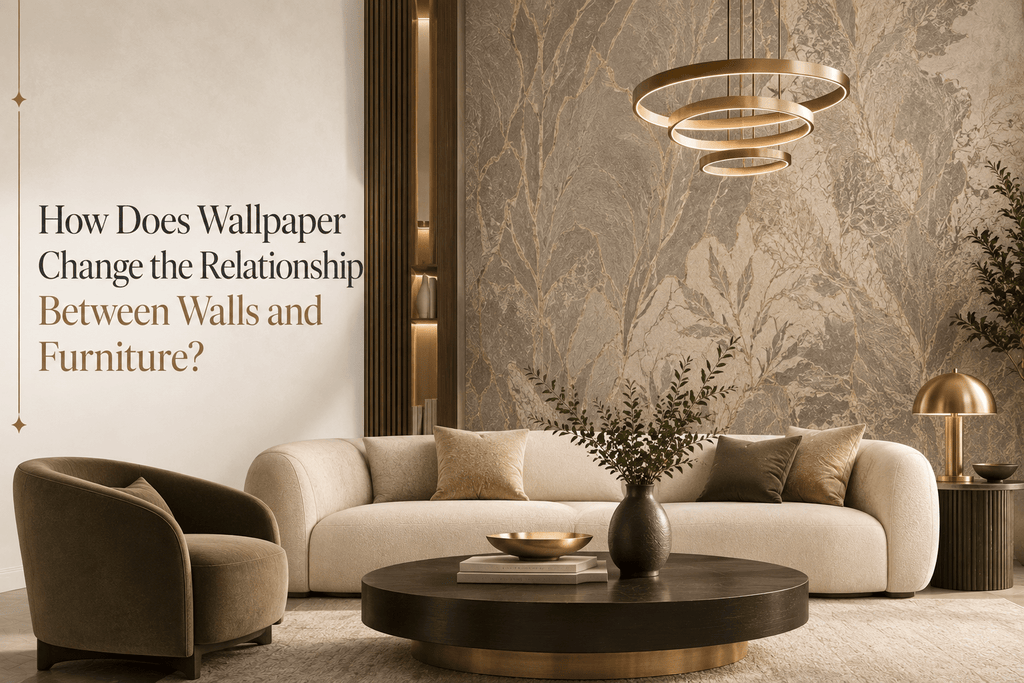
Furniture is usually treated as the main character of an interior.
We spend time choosing the sofa, dining table, bed, chairs, lighting, and accessories. Then, almost as an afterthought, we decide what should happen to the walls.
But walls aren't passive backgrounds.
They influence how furniture is perceived—its scale, color, silhouette, material, and even its overall presence within a room.
This is where wallpaper becomes particularly interesting.
The right wallcovering can make a sofa feel more grounded, make wood furniture appear warmer, give minimalist pieces greater presence, or create contrast that allows a statement chair to stand out.
In other words, wallpaper doesn't simply decorate the wall.
It changes the visual relationship between the wall and everything placed in front of it.
At AdaWall, we see wallcovering as part of the complete interior composition. The goal isn't to choose wallpaper independently from the furniture. It's to make both elements work together.
Walls Are Part of the Furniture Composition
When you enter a room, your eyes don't experience the sofa, wall, floor, and lighting as completely separate objects.
They are perceived together.
A dark sofa against a pale wall creates one visual relationship.
The same sofa against a deep textured wall creates another.
A light wood cabinet against plain white paint feels different from the same cabinet against warm stone-inspired wallpaper.
The furniture hasn't changed.
The context has.
Wallpaper provides that context.
1. Wallpaper Can Make Furniture Stand Out
One of the simplest ways wallpaper affects furniture is by creating contrast.
Imagine a sculptural cream-colored sofa against a deep green wallcovering.
The silhouette becomes more noticeable.
Now place the same sofa against a similar pale neutral.
The sofa may visually blend into its surroundings.
Neither approach is inherently better.
The question is what you want the furniture to do.
If a piece has an interesting shape, material, or color, contrasting wallpaper can help draw attention to it.
2. Tonal Wallpaper Can Make Furniture Feel More Integrated
Contrast isn't always the goal.
Sometimes you want the furniture and walls to feel connected.
Tonal wallpaper is particularly effective for this.
A warm beige wallcovering behind natural wood furniture can create a continuous palette.
Soft gray wallpaper can complement gray upholstery.
Muted green can connect with natural materials and botanical accents.
The result is less about making individual objects stand out and more about creating a unified environment.
3. Texture Can Change How We Read Furniture
Texture doesn't only affect the wall.
It changes the way nearby materials are perceived.
Consider a smooth velvet sofa against a subtly woven wallcovering.
The contrast between soft upholstery and tactile texture creates depth.
Now imagine that same sofa against a completely flat wall.
The room may feel cleaner, but less layered.
This is why textured wallpaper can be especially useful in interiors where the furniture palette is relatively simple.
The wall adds another material to the composition.
4. Wallpaper Can Make Wood Furniture Feel Warmer
Natural wood already brings warmth to an interior.
But the wall behind it can either reinforce that warmth or work against it.
Warm beige, clay, sand, olive, and natural stone-inspired wallpaper can complement wood beautifully.
The combination creates a layered palette that feels connected to natural materials.
Cooler wallpaper can produce a different effect.
It can create contrast and make the wood appear warmer by comparison.
5. Dark Walls Can Give Furniture More Visual Weight
A dark wall can change the perceived presence of furniture.
Against a deep charcoal, navy, or forest green wall, lighter furniture can appear more defined.
At the same time, dark furniture can feel more integrated rather than floating against a bright background.
This can be particularly effective in dining rooms, libraries, and sophisticated living spaces.
Dark wallpaper doesn't necessarily make furniture disappear.
It can actually give it a stronger visual context.
6. Wallpaper Can Influence Perceived Furniture Scale
Scale isn't only about the physical dimensions of a piece.
It is also about visual relationships.
A small-scale wallpaper pattern can make large furniture feel even more dominant because the wall is filled with numerous small elements.
A large-scale pattern can create a different relationship by giving the wall more visual weight.
This is why pattern scale should be considered alongside furniture dimensions.
A massive sectional may need a wall treatment with enough visual presence to balance it.
A delicate console may work better against a quieter texture.
7. Large Furniture Needs a Strong Enough Background
Large furniture can sometimes make a room feel visually bottom-heavy.
A substantial sofa, oversized bed, or large dining table occupies significant visual space.
Wallpaper can help distribute that weight.
A large-scale pattern above a sofa can create a stronger vertical composition.
A textured wall behind a large bed can make the entire arrangement feel more intentional.
The goal is balance.
The wall shouldn't overpower the furniture, but it shouldn't disappear either.
8. Wallpaper Can Frame a Piece of Furniture
Wallpaper can create a visual frame around important furniture.
The classic example is a bed.
A feature wall behind the headboard establishes a clear relationship between the wall and the furniture.
The same principle works with:
-
Sofas
-
Fireplaces
-
Dining tables
-
Consoles
-
Desks
-
Reading chairs
The wallpaper helps establish where the furniture belongs within the composition.
9. The Wall Behind a Sofa Is More Important Than It Seems
Living rooms often have a large uninterrupted wall behind the sofa.
This is a natural opportunity for wallpaper.
A subtle textured design can provide depth.
A geometric pattern can establish structure.
A botanical design can soften contemporary furniture.
An abstract wallcovering can turn the wall into artwork.
Because the sofa is already a major horizontal element, consider how the wallpaper interacts with its shape.
A vertically oriented pattern can introduce contrast.
A large horizontal composition can reinforce the furniture's width.
10. Wallpaper Can Connect Furniture From Different Styles
Not every room has furniture from the same collection or design era.
A contemporary sofa may sit beside a vintage cabinet.
A modern dining table may be paired with traditional chairs.
A minimalist bed may share a room with antique accessories.
Wallpaper can act as a bridge between these elements.
A transitional wallcovering can connect different materials and styles through color, texture, or pattern.
Instead of forcing every piece to match, the wall creates a common visual language.
11. Pattern Can Echo Furniture Shapes
One of the more sophisticated ways to combine wallpaper and furniture is to look for repetition in form.
For example:
Curved furniture can work beautifully with flowing botanical or organic patterns.
Angular furniture can pair with geometric wallcoverings.
Rounded lighting can complement circular motifs.
Linear furniture can work with vertical or architectural textures.
The repetition doesn't have to be obvious.
Even subtle similarities can create visual harmony.
12. Wallpaper Can Make Minimalist Furniture More Interesting
Minimalist furniture often relies on clean silhouettes and restrained materials.
That's beautiful—but a room built entirely from smooth surfaces can sometimes feel flat.
Textured wallpaper can introduce the missing layer.
A simple oak console against a tactile wall becomes more visually interesting.
A clean-lined sofa gains a richer backdrop.
A minimalist bed can feel more sophisticated against a subtle embossed surface.
The furniture remains simple.
The wall adds complexity.
13. It Can Also Calm Visually Busy Furniture
The opposite is equally important.
If your furniture already contains strong patterns, colors, or decorative details, wallpaper doesn't need to compete.
A tonal texture can provide a quiet background.
This allows statement furniture to remain the focal point.
Think of wallpaper as a volume control.
Sometimes it turns the visual intensity up.
Sometimes it turns it down.
14. Wallpaper Changes How Upholstery Colors Appear
Color is always contextual.
A beige sofa doesn't look identical against every wall.
Warm wallpaper can make neutral upholstery appear creamier.
Cool wallpaper can make the same upholstery feel grayer.
Deep colors can make light fabrics appear brighter.
This is why choosing wallpaper from a digital screen alone can be risky.
Whenever possible, compare physical samples against your actual furniture.
15. Metallic and Reflective Details Need the Right Background
Furniture often includes metal details:
-
Brass
-
Chrome
-
Bronze
-
Black metal
-
Brushed nickel
Wallpaper can influence how these finishes appear.
Warm textured wallpaper can make brass feel richer.
Cooler tones can make chrome feel sharper and more contemporary.
Dark backgrounds can make metallic details stand out dramatically.
Again, the wall isn't merely behind the furniture.
It's part of the lighting and color environment surrounding it.
16. Wallpaper Can Make Furniture Feel More Expensive
Luxury isn't always about expensive materials.
It's often about relationships between materials.
A simple sofa can feel more sophisticated against a carefully selected textured wall.
A basic wood console can gain presence when surrounded by a refined color palette.
A modest dining table can look more intentional when the wall behind it provides architectural depth.
Wallpaper can create the visual context that makes furniture feel considered rather than randomly placed.
17. Think About Negative Space
Not every wall needs to be filled with furniture.
In fact, wallpaper can make negative space more valuable.
A beautifully textured wall behind a simple chair doesn't need artwork, shelving, or additional decoration.
The empty wall becomes part of the composition.
This can be particularly effective in minimalist interiors.
The wallpaper provides enough visual interest that the furniture can remain restrained.
18. Wallpaper Can Help Define Furniture Zones
In open-plan interiors, furniture often needs to establish different areas.
A sofa may define the living zone.
A dining table establishes the dining area.
A desk creates a workspace.
Wallpaper can reinforce these boundaries.
A feature wall behind the dining table can visually establish the dining area.
A different wall treatment behind a desk can distinguish the workspace.
This creates zoning without adding physical partitions.
19. Consider the Floor-Wall-Furniture Relationship
Wallpaper should never be considered in isolation.
Think about the three major visual layers:
Floor → Furniture → Wall
The floor provides the foundation.
Furniture occupies the middle layer.
Wallpaper establishes the vertical backdrop.
If all three layers have strong patterns or textures, the room may feel overly busy.
If all three are completely flat, the room may lack depth.
The most successful interiors often distribute visual interest across these layers.
20. The Best Wallpaper Doesn't Compete With Furniture
A beautiful wallpaper isn't necessarily the one that attracts the most attention.
Sometimes the best wallcovering is the one that makes everything else look better.
It might quietly reinforce the color of a sofa.
Make wood furniture feel warmer.
Give a bed a stronger focal position.
Create contrast behind a sculptural chair.
Or simply make the entire room feel more cohesive.
That is the real power of wallcovering.
How to Match Wallpaper With Furniture
Before choosing your wallpaper, look at the room as a complete composition.
Start With the Largest Furniture Piece
Usually this is the sofa, bed, or dining table.
Identify the Dominant Material
Is the room primarily wood, stone, metal, fabric, or a combination?
Decide Whether You Want Contrast or Continuity
Should the furniture stand out or blend into the environment?
Consider Pattern Scale
Large furniture generally needs a wall treatment with enough visual weight.
Look at Texture
Smooth furniture can benefit from tactile walls, while heavily textured furniture may need a quieter background.
Test Physical Samples
Place wallpaper samples directly behind furniture and view them under different lighting conditions.
Why AdaWall Looks Beyond the Wall
At AdaWall, we believe wallpaper should be selected as part of the entire interior—not as an isolated decorative decision.
Our approach combines texture, embossing, color, pattern, and material expression to create wallcoverings that interact naturally with furniture and architecture.
The wall can frame a sofa.
It can ground a dining table.
It can soften contemporary furniture.
It can connect contrasting styles.
Or it can simply provide the quiet layer that allows everything else to work.
The most successful interior isn't the one where every element competes for attention.
It's the one where everything feels like it belongs together.
Frequently Asked Questions
Should wallpaper match the furniture?
It doesn't need to match exactly. Wallpaper can either complement the furniture through similar tones and materials or create contrast to make certain pieces stand out.
Can wallpaper make furniture look different?
Yes. The color, texture, and pattern of the wall can influence how furniture colors, materials, and proportions are perceived.
Should patterned furniture be paired with plain wallpaper?
Not always. Patterned furniture can work with patterned wallpaper when the scale, color, and visual intensity are carefully balanced.
What wallpaper works well with wood furniture?
Warm neutrals, natural textures, earthy tones, and organic patterns can complement wood beautifully, although contrasting cooler tones can also create an interesting effect.
Can textured wallpaper work with modern furniture?
Absolutely. Textured wallpaper can add depth and warmth to clean-lined contemporary furniture without compromising a minimalist aesthetic.
Should the wall behind a sofa be wallpapered?
It can be an excellent location for wallpaper, particularly when you want to create a focal point or give the sofa a stronger visual backdrop.
Final Thoughts
Furniture doesn't exist independently from its surroundings.
The wall behind it changes how it is seen.
Wallpaper can make furniture stand out or blend in. It can emphasize texture, alter perceived scale, establish contrast, create harmony, and connect pieces that might otherwise feel unrelated.
That's why choosing wallpaper shouldn't be the final decorative step.
It should be part of the larger design conversation.
At AdaWall, we believe the most successful interiors aren't created by choosing beautiful walls and beautiful furniture separately.
They're created by making the two work beautifully together.