


How Does Wallpaper Work in Homes With High Ceilings?
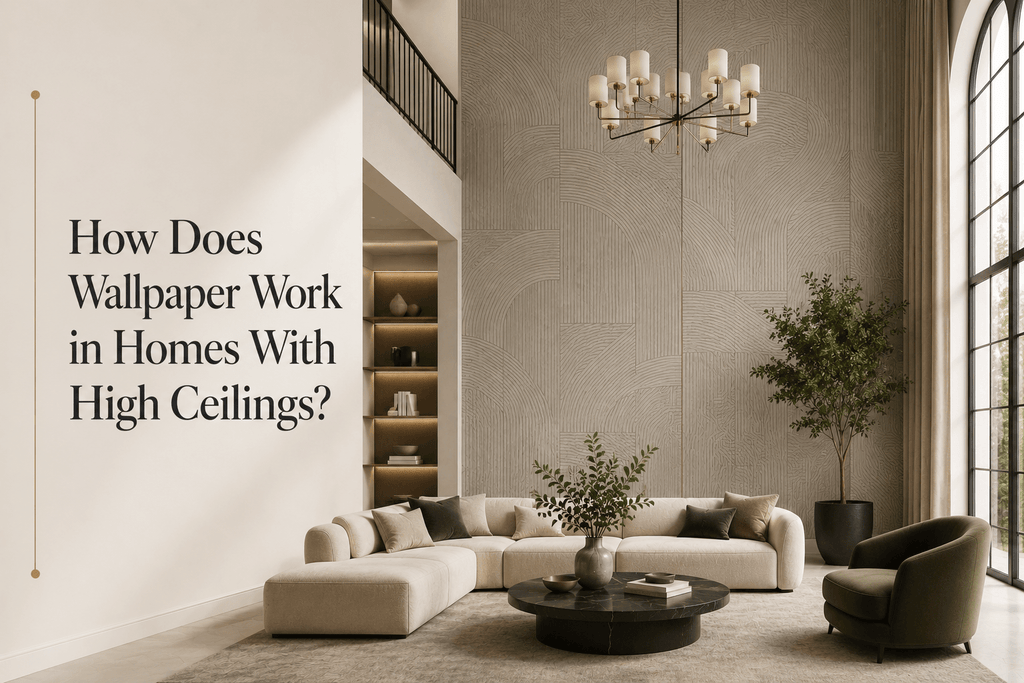
High ceilings are one of the most striking architectural features a home can have.
They bring in more light, create a sense of openness, and give rooms a naturally impressive scale. But they can also create a design challenge: how do you make tall walls feel intentional rather than overwhelming?
Wallpaper can be an especially effective solution.
Unlike paint, wallpaper can introduce pattern, texture, rhythm, and visual direction across a large vertical surface. The right wallcovering can emphasize the architecture, make a tall room feel more balanced, or create a dramatic atmosphere that embraces the scale rather than trying to hide it.
At AdaWall, we believe high ceilings shouldn't be treated as something that needs to be visually corrected. They are an opportunity to make the walls part of the architecture.
Why High Ceilings Change the Wallpaper Equation
In a room with standard ceiling height, wallpaper is often considered primarily in terms of color and pattern.
With high ceilings, scale becomes equally important.
A design that looks balanced on a standard wall may appear too small or visually repetitive when extended across a much taller surface.
High ceilings give wallpaper more room to develop.
Large-scale botanical designs, architectural patterns, vertical motifs, and dimensional textures can all take advantage of that additional height.
The wall becomes a major design element rather than simply a background.
1. Use Large-Scale Patterns With Confidence
High ceilings can handle patterns that might overwhelm a smaller room.
Large botanical motifs, oversized abstract forms, and expansive geometric designs can fill the vertical space more naturally.
Instead of repeating a tiny motif dozens of times from floor to ceiling, a large pattern gives the eye something substantial to follow.
This can create a stronger relationship between the wallpaper and the architecture.
The important consideration is proportion.
The larger the wall, the more room the pattern generally has to breathe.
2. Vertical Patterns Can Emphasize Height
If your goal is to celebrate the architecture, vertical patterns can reinforce the natural direction of the room.
Tall botanical forms, elongated geometric shapes, and vertical textures can draw the eye upward.
This can create a dramatic, gallery-like effect.
However, if the room already feels excessively tall, you may not want to emphasize height even further.
That's when horizontal rhythm, large-scale motifs, or stronger visual transitions can help create balance.
3. Don't Automatically Try to Make the Ceiling Feel Lower
A common approach to tall rooms is to try to visually reduce the ceiling height.
Sometimes that is appropriate.
But high ceilings can be one of the most beautiful architectural characteristics of a home.
Instead of hiding the height, consider embracing it.
A dramatic wallpaper that extends across the full wall can make the room feel intentional and sophisticated.
The question becomes less about "How do I reduce the height?" and more about "How do I make this height feel designed?"
4. Texture Can Balance a Tall Wall
High walls can sometimes feel visually flat simply because there is so much surface area.
Texture helps break up that expanse.
Subtle linen-inspired finishes, woven effects, plaster-like surfaces, and embossed wallpaper can introduce visual variation without requiring a strong pattern.
This can be particularly effective in minimalist interiors.
A tall wall covered in a refined neutral texture can feel architectural rather than empty.
5. Embossed Wallpaper Works Beautifully With Light
High-ceilinged rooms often have larger windows and stronger changes in natural light.
This creates an opportunity for dimensional wallcoverings.
Embossed wallpaper interacts with light through raised and recessed areas.
As sunlight moves through the room, the shadows across the wall change.
Wall sconces can emphasize the relief.
Pendant lighting can create additional depth.
The result is a wall that feels dynamic throughout the day.
6. Consider the Relationship Between Wallpaper and Moldings
High ceilings often come with architectural details such as:
-
Crown molding
-
Wainscoting
-
Wall paneling
-
Picture rails
-
Decorative trim
-
Architectural columns
Wallpaper doesn't need to compete with these elements.
It can actually enhance them.
A subtle textured wallcovering can allow detailed molding to remain the focus.
A stronger pattern can create contrast and make architectural details feel even more prominent.
The key is to treat the wallpaper and architecture as parts of the same composition.
7. Use Wallpaper Above Wainscoting
A room with high ceilings doesn't necessarily need wallpaper from floor to ceiling.
Wainscoting can create a natural horizontal division.
Wallpaper above the molding can add pattern and texture while maintaining a sense of architectural structure.
This approach can be particularly effective in traditional and transitional homes.
It also gives you an opportunity to combine materials:
Painted wood + textured wallpaper + architectural trim
The result can feel much more layered than a single wall treatment.
8. Create a Visual Break When Necessary
If the walls are exceptionally tall, a visual break can help establish proportion.
Architectural molding, paneling, artwork, or wainscoting can divide the wall into distinct visual zones.
Wallpaper can then become part of one of those zones.
For example, you might use a textured wallpaper above wainscoting and a contrasting paint color below.
This doesn't reduce the actual ceiling height.
It simply gives the eye more points of reference.
9. Dark Wallpaper Can Make Tall Rooms Feel More Intimate
Large rooms with high ceilings can sometimes feel distant.
Dark wallpaper can help create a stronger sense of enclosure.
Deep green, navy, charcoal, brown, and other rich colors can visually absorb some of the light and make the room feel more intimate.
This can be especially effective in:
-
Dining rooms
-
Libraries
-
Formal living rooms
-
Media rooms
-
Bedrooms
Instead of fighting the scale of the room, the darker wallcovering makes it feel more enveloping.
10. Light Wallpaper Keeps the Architecture Airy
If you love the openness created by high ceilings, lighter wallpaper can preserve that feeling.
Warm whites, ivory, soft beige, pale gray, and muted natural tones can maintain an airy atmosphere while introducing more texture than paint.
This is particularly effective when paired with:
-
Large windows
-
Natural wood
-
Linen furniture
-
Light flooring
-
Minimalist furnishings
The result can feel spacious without becoming visually empty.
11. Use Pattern to Establish a Focal Point
High ceilings naturally attract attention.
Wallpaper can direct that attention toward a specific architectural feature.
Consider placing a stronger pattern on:
-
A fireplace wall
-
The wall behind a bed
-
A dining room wall
-
A staircase wall
-
A double-height entryway
The wallpaper creates a visual destination within the larger volume.
This can help organize an otherwise expansive room.
12. Double-Height Spaces Need Special Consideration
Double-height interiors can be particularly dramatic.
Because the wall may extend across two levels, wallpaper becomes a major architectural statement.
Large-scale designs often work well here because they have enough space to develop.
However, installation becomes more complex.
Professional installation is strongly recommended for very tall walls, especially when working with:
-
Large pattern repeats
-
Embossed wallpaper
-
Delicate textures
-
Multiple-story walls
Proper alignment becomes increasingly important as wall height increases.
13. Think About the Viewing Distance
A wallpaper pattern should be evaluated from the distance at which it will normally be viewed.
A design that looks intricate up close may appear almost plain from across a large room.
Conversely, a very strong pattern can dominate when viewed from the opposite side of the space.
This is why physical samples are valuable—but they should be considered alongside the full dimensions of the room.
Try to imagine the pattern across the entire wall rather than judging it only at sample size.
14. Lighting Becomes Even More Important
High ceilings often mean larger windows, taller light fixtures, and more complex lighting arrangements.
Wallpaper can respond differently to each source.
Natural daylight can reveal subtle textures.
Wall sconces can emphasize embossing.
Pendant lights can create dramatic shadows.
Recessed lighting can highlight certain areas of the wall.
Before selecting a wallcovering, consider how the room changes from morning to evening.
15. Coordinate Wallpaper With Oversized Furniture
High ceilings require furniture with enough visual weight to feel proportional.
The wallpaper should work with that scale.
A large room with oversized furniture may support a dramatic wallcovering.
A minimalist interior may benefit from a quieter texture.
The relationship between:
wall + furniture + lighting + architecture
is more important than any single element.
The wallpaper should help establish balance across the entire room.
16. High Ceilings Are Ideal for Dramatic Murals
Large walls can provide the perfect canvas for mural-style wallpaper.
Botanical landscapes, abstract artwork, architectural scenes, and large-scale nature-inspired compositions can take advantage of the available height.
A mural can turn an otherwise empty vertical surface into a visual experience.
In particularly tall rooms, a mural can also create a sense of scale by giving the eye multiple layers to explore.
17. Consider the Room's Architectural Style
The best wallpaper choice depends partly on the architecture.
Traditional Homes
Classic patterns, refined botanicals, damask-inspired designs, and textured finishes can complement decorative molding and detailed architecture.
Contemporary Homes
Abstract patterns, geometric designs, and dimensional textures can reinforce clean architectural lines.
Transitional Interiors
Tonal patterns and sophisticated textures can bridge traditional and contemporary elements.
Minimalist Homes
Subtle textures and quiet patterns can add depth without disrupting the simplicity.
Wallpaper should feel like it belongs to the building.
18. Don't Forget the Staircase
Tall staircases can create some of the most dramatic wallpaper opportunities in a home.
A staircase wall is often difficult to decorate with furniture or artwork because of its shape.
Wallpaper can provide continuous visual treatment across the vertical surface.
Large botanical patterns, subtle textures, and vertical designs can all work beautifully here.
Because installation can involve unusual heights and angles, professional application is particularly valuable.
19. Use Color to Control Visual Weight
Color affects how much visual attention a wall receives.
Lighter colors generally create a more open impression.
Darker colors create greater visual weight.
Strong contrast attracts attention.
Low-contrast patterns create a quieter effect.
This gives you a useful design tool.
If the room already contains strong architectural details, consider a lower-contrast wallpaper.
If the architecture is relatively simple, a stronger pattern can give the walls more presence.
20. Wallpaper Doesn't Have to Cover Every Wall
A common misconception is that wallpaper is either an all-or-nothing decision.
It isn't.
You can use it strategically.
A single wall can become a focal point.
A fireplace wall can receive a dramatic pattern.
A staircase can be treated as a vertical feature.
A bedroom can use wallpaper behind the bed.
This allows you to work with the architecture instead of applying the same treatment everywhere.
How to Choose Wallpaper for a High-Ceilinged Room
Before making your final selection, consider:
What is the room's natural scale?
Measure the ceiling height and wall dimensions.
Do you want to emphasize or soften the height?
Your pattern direction and scale can influence this.
How much natural light enters the room?
This affects both color and texture.
What architectural details already exist?
Molding, paneling, columns, and fireplaces should be considered.
What is the scale of the furniture?
Wallpaper should feel proportional to the entire room.
How will the pattern look from a distance?
Always think beyond the sample.
Why AdaWall Works With High-Ceiling Architecture
At AdaWall, we see wallpaper as an architectural material as much as a decorative one.
Our collections explore texture, embossing, pattern, color, and natural inspiration to create wallcoverings that can respond to different scales and interior styles.
High ceilings provide an opportunity to use wallpaper at its most expressive.
A large-scale pattern can become artwork.
A subtle texture can soften an expansive wall.
An embossed finish can interact with changing light.
A carefully selected color can influence the entire atmosphere.
The wall becomes part of the architecture rather than simply a surface surrounding it.
Frequently Asked Questions
Is wallpaper a good choice for homes with high ceilings?
Yes. High ceilings provide more vertical surface for wallpaper to create pattern, texture, and visual impact. The key is selecting a scale and design that complements the proportions of the room.
Should wallpaper go all the way to a high ceiling?
Not necessarily. Full-height wallpaper can create a dramatic effect, but wainscoting, molding, or feature-wall applications can also provide effective visual structure.
What wallpaper pattern works best with high ceilings?
Large-scale patterns, vertical motifs, oversized botanicals, architectural designs, and dimensional textures can work particularly well because they have enough space to develop.
Can wallpaper make a high-ceilinged room feel cozier?
Yes. Richer colors, textured surfaces, and lower-contrast patterns can create a more intimate atmosphere within a large volume.
Is professional installation recommended for high walls?
For very tall or double-height walls, professional installation is often advisable, particularly with large pattern repeats, delicate textures, or embossed wallcoverings.
Final Thoughts
High ceilings don't need to be visually reduced.
They can be celebrated.
Wallpaper gives you the ability to work with that vertical scale through pattern, texture, color, and architectural rhythm.
A dramatic mural can transform a double-height wall.
A subtle texture can give a minimalist room depth.
A rich color can make a large interior feel intimate.
And a carefully scaled pattern can make the entire room feel more balanced.
At AdaWall, we believe the most successful wallcoverings don't simply decorate architecture.
They become part of it.