


Small Spaces Can Benefit the Most: How Wallpaper Creates Bigger Design Impact
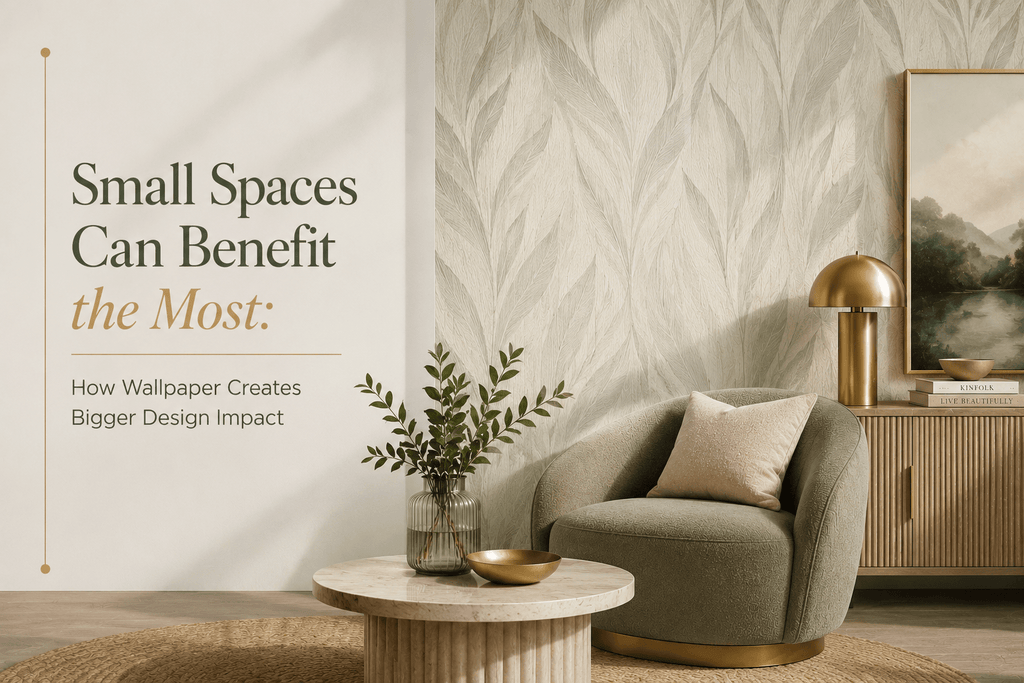
Small rooms are often approached with the same question: How can I make this space feel bigger?
The usual answers involve lighter colors, fewer furnishings, more mirrors, and careful organization. These strategies can certainly help, but they can also lead homeowners toward an overly cautious approach to design.
A small room doesn't necessarily need to disappear.
In many cases, it can benefit from becoming more intentional.
Wallpaper offers a unique way to do that. Rather than treating limited square footage as a restriction, a thoughtfully selected wallcovering can give a compact room identity, depth, texture, and atmosphere.
From a dramatic powder room to a softly textured bedroom, small spaces can actually be some of the best places to experiment with wallpaper.
At AdaWall, we believe scale doesn't have to limit creativity. Sometimes, the smallest room offers the biggest opportunity to make a design statement.
Why Small Rooms Are Perfect for Wallpaper
Large rooms often require multiple design elements to create visual cohesion.
A small room already has a natural sense of intimacy.
That means a single wallcovering can have a much greater impact.
Wallpaper can immediately establish:
-
Color
-
Texture
-
Pattern
-
Mood
-
Focal points
-
Visual rhythm
Instead of filling the room with additional accessories, the walls themselves can provide much of the visual character.
This can be especially useful when floor space is limited.
Small Doesn't Mean Boring
One of the biggest mistakes homeowners make with compact rooms is assuming that every element needs to be minimal.
A small space can actually accommodate a stronger design concept because there are fewer competing elements.
Think about a powder room.
There may be a vanity, mirror, lighting, and a few accessories—but not much else.
That makes the walls an opportunity.
A richly textured wallpaper or expressive pattern can transform the entire room without taking up a single additional inch of floor space.
1. Use Texture to Create Depth
Texture is one of the easiest ways to add dimension to a small room.
A flat painted wall provides a single visual surface.
A textured wallcovering introduces variation in light and shadow.
Linen-inspired textures, woven effects, subtle relief, and embossed finishes can make the walls feel more layered.
The effect doesn't necessarily make the room physically larger.
Instead, it makes the space feel more visually developed.
That distinction is important.
The goal isn't always to create an illusion of more square footage.
Sometimes the better strategy is to make the available space feel richer.
2. Don't Be Afraid of Dark Wallpaper
Small rooms are often automatically assigned light colors.
While lighter colors can certainly create an airy atmosphere, dark wallpaper shouldn't be dismissed.
Deep green, navy, charcoal, brown, and other rich shades can create a sense of intimacy.
This can work particularly well in:
-
Powder rooms
-
Reading spaces
-
Dining areas
-
Small bedrooms
-
Home offices
Instead of trying to make a compact room feel like a large room, embrace its intimacy.
A darker wallcovering can make that quality feel intentional.
3. Choose Large Patterns Carefully
Large-scale wallpaper patterns can work surprisingly well in small rooms.
The key is to avoid judging the pattern only from a small sample.
A large botanical or abstract motif may look overwhelming on a sample card but become beautifully balanced when spread across an entire wall.
Large patterns can also reduce the visual fragmentation created by many small repeated motifs.
However, pattern scale should always be considered alongside:
-
Ceiling height
-
Wall width
-
Furniture size
-
Windows
-
Door placement
A dramatic pattern works best when the design has enough room to breathe.
4. Small-Scale Patterns Create Subtle Rhythm
If you prefer a quieter effect, small-scale patterns can provide gentle visual movement.
Repeating geometric forms, delicate botanicals, and tonal motifs can create interest without becoming the dominant feature.
This approach works especially well when the room already contains noticeable furniture or accessories.
The wallpaper becomes part of the composition rather than competing with it.
5. Try Tonal Wallpaper
One of the most sophisticated approaches for small spaces is tonal wallpaper.
Rather than using strong contrast, tonal designs work with closely related colors.
For example:
-
Ivory with soft beige
-
Taupe with warm brown
-
Sage with muted green
-
Stone with subtle gray
-
Cream with delicate warm texture
The result is visually interesting without creating excessive contrast.
Tonal wallpaper can be particularly effective in bedrooms and small living spaces where a calm atmosphere is important.
6. Create Height With Vertical Patterns
Vertical patterns can influence the way we perceive a room's proportions.
A vertically oriented design can draw the eye upward, emphasizing the height of the wall.
This can be particularly useful in rooms with:
-
Low ceilings
-
Narrow proportions
-
Limited wall width
The effect doesn't physically change the architecture, but it can alter the visual emphasis of the space.
Vertical botanical forms, elongated geometric designs, or subtle linear textures can all contribute to this effect.
7. Use the Ceiling as Part of the Design
Small rooms provide an opportunity to think beyond the four walls.
A wallpapered ceiling can create a more immersive environment.
This can work especially well in:
-
Powder rooms
-
Small bedrooms
-
Reading rooms
-
Entryways
A subtle texture can make the ceiling feel integrated with the walls.
A stronger pattern can create a dramatic enclosed effect.
If you want to experiment with ceiling wallpaper, careful planning and professional installation may be particularly valuable.
8. Powder Rooms Are Made for Experimentation
If you're hesitant to use bold wallpaper throughout your home, start with the powder room.
It is small.
It is visually separate from many main living areas.
And it offers an opportunity to create a memorable experience.
A powder room can handle:
-
Dark colors
-
Large botanical patterns
-
Bold geometry
-
Metallic accents
-
Embossed textures
-
Dramatic contrasts
Because the space is compact, you can create a strong visual effect without committing an entire large room to the design.
9. Turn a Small Home Office Into a Designed Space
Home offices don't have to feel purely functional.
A carefully selected wallcovering can help establish a visual identity while creating a more finished environment.
For smaller offices, consider:
-
Tonal geometric patterns
-
Refined textures
-
Organic designs
-
Warm neutrals
-
Subtle architectural effects
If the desk and storage already provide strong visual structure, a restrained wallcovering may be the better choice.
10. Use Wallpaper to Define a Small Nook
Small architectural areas can sometimes feel accidental.
A reading nook, alcove, or compact seating area can become more intentional when its walls are treated differently.
Wallpaper can visually establish the area as its own destination.
This is particularly effective in open-plan homes.
Instead of building a physical wall, you can create a visual boundary.
11. Let the Wallpaper Do More Work
One advantage of wallpaper in small rooms is that it can combine several decorative functions at once.
A textured wallpaper can provide:
Color + texture + pattern + atmosphere
That means you may not need as many decorative objects.
A strong wallcovering can reduce the need for excessive artwork, accessories, or furniture.
This can actually help a small room feel less cluttered.
12. Consider Continuous Coverage
In some small rooms, using wallpaper across multiple walls can create a more cohesive effect than limiting it to one feature wall.
Instead of creating visual stops and starts, continuous wallpaper can allow the pattern or texture to flow around the room.
This can create a more immersive experience.
However, the right approach depends on the pattern and architecture.
A strong design may work best on one focal wall, while a subtle texture can be beautiful across the entire room.
13. Lighting Matters More in Small Spaces
Because compact rooms have less visual space, lighting can have an especially strong effect on the appearance of wallpaper.
Natural light may reveal texture during the day.
Wall sconces can emphasize embossed details.
Pendant lighting can create shadows across a dimensional surface.
Warm bulbs can change the appearance of neutral colors.
Before choosing wallpaper, consider how the room looks throughout the day.
A sample viewed only under showroom lighting won't tell the whole story.
14. Use Mirrors Strategically
Wallpaper and mirrors can work together beautifully.
A mirror can reflect both the pattern and the available light, increasing the visual presence of the wallcovering.
This can be particularly effective in powder rooms and compact entryways.
Instead of choosing between wallpaper and a mirror, consider how the two elements can reinforce each other.
15. Match the Pattern to the Architecture
A small room still has architectural characteristics.
Pay attention to:
-
Door placement
-
Windows
-
Ceiling height
-
Niches
-
Built-in furniture
-
Moldings
-
Corners
The wallpaper should work with these elements.
A large motif may need careful positioning around a doorway.
A vertical design can emphasize a tall wall.
A subtle texture can help unify irregular surfaces.
Good wallpaper design isn't simply about selecting a beautiful pattern.
It's about selecting one that belongs in the room.
16. Don't Ignore the Floor and Furniture
The wall isn't the only surface in a small room.
Because every element is relatively close together, relationships between materials become more noticeable.
Consider the combination of:
Wallpaper + flooring + furniture + lighting + hardware
A warm textured wallpaper can complement natural wood.
A cool geometric design can work with contemporary metal finishes.
A botanical pattern can soften clean-lined furniture.
The goal is visual balance rather than perfect matching.
17. Choose the Right Finish
The finish can influence how the wallpaper behaves visually.
Matte finishes
Create a softer and more understated appearance.
Textured finishes
Add depth without necessarily increasing color contrast.
Embossed finishes
Introduce physical relief and changing shadows.
Reflective details
Can interact strongly with available light.
For compact rooms, subtle texture is often an effective way to create interest without overwhelming the space.
18. Think Beyond the "Make It Look Bigger" Rule
Perhaps the most important design lesson is this:
Not every small room needs to look bigger.
Sometimes trying too hard to enlarge a room visually can remove the very qualities that make it appealing.
A small room can feel:
-
Cozy
-
Intimate
-
Dramatic
-
Sophisticated
-
Personal
-
Immersive
Wallpaper can help emphasize these qualities.
Instead of fighting the proportions of the room, work with them.
How to Choose Wallpaper for a Small Space
Before making your final choice, ask yourself:
What do I want the room to feel like?
Calm? Dramatic? Warm? Playful? Sophisticated?
How much natural light does it receive?
This can influence your color and finish choices.
Is the room already visually busy?
If so, consider a tonal or textured design.
Does the architecture provide opportunities?
Look for niches, alcoves, feature walls, or unusual proportions.
How much pattern can the room handle?
Use furniture and accessories as part of the calculation.
Have I seen the actual sample in the room?
Always evaluate wallpaper in its intended environment.
Why AdaWall Works for Small-Space Design
At AdaWall, our approach to wallcovering is centered on creating depth, character, and atmosphere through the wall itself.
Our collections explore sophisticated textures, embossed finishes, organic influences, contemporary patterns, and refined color palettes that can be adapted to both expansive interiors and compact rooms.
A small room doesn't need less personality.
Sometimes it simply needs a more intentional design.
Frequently Asked Questions
Is wallpaper a good idea for a small room?
Yes. Wallpaper can add color, texture, pattern, and personality without taking up physical space, making it particularly useful in compact interiors.
Should small rooms always use light wallpaper?
No. Light wallpaper can create an airy atmosphere, but dark and saturated wallcoverings can also work beautifully when the goal is intimacy and drama.
Does large-pattern wallpaper work in small rooms?
It can. Large-scale designs can create a strong visual statement, but pattern scale should be considered alongside the room's proportions, furniture, and architecture.
What wallpaper is best for making a small room feel taller?
Vertically oriented patterns can draw the eye upward and emphasize the height of the room.
Is textured wallpaper good for small spaces?
Yes. Texture can introduce depth and visual interest without requiring strong color or a complicated pattern.
Final Thoughts
Small spaces don't have to be treated as design problems.
They can be opportunities.
A compact room gives you a chance to be more expressive, more intentional, and sometimes more adventurous than you might be in a large open interior.
Texture can create depth.
Pattern can establish personality.
Color can create atmosphere.
And thoughtful wallpaper placement can turn an overlooked corner into one of the most memorable spaces in the home.
At AdaWall, we believe great design isn't measured in square feet.
Sometimes, the smallest room is where the biggest design idea begins.